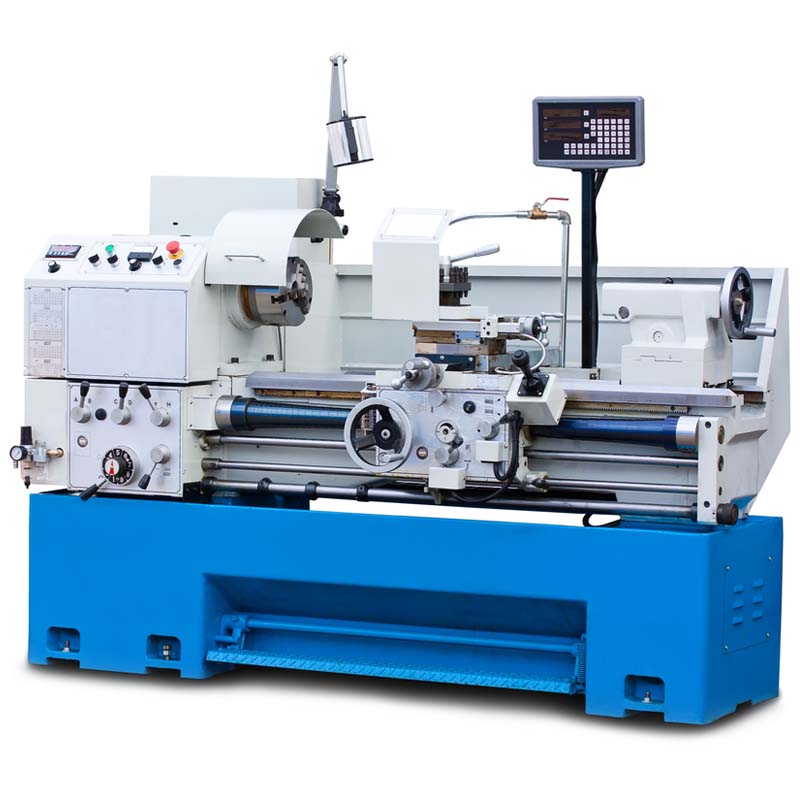
Saddle Turret Lathe Machine Functions and Uses
When it comes to precision machining and metal fabrication, few tools have proven as versatile and reliable as the saddle turret lathe machine. Known in Indonesian manufacturing circles as the "Mesin Bubut Turret Sadel," this specialized piece of equipment has carved out a critical role in workshops and production facilities around the world. Whether you’re a seasoned machinist or someone just getting familiar with industrial equipment, understanding how this machine works and what it can do is genuinely valuable knowledge in today’s manufacturing landscape.
Understanding the Saddle Turret Lathe Machine
The saddle turret lathe machine is a type of lathe that combines the features of a conventional lathe with a turret head and a saddle assembly, creating a system that allows machinists to perform multiple operations without constantly repositioning the workpiece. The "saddle" refers to the carriage component that slides along the lathe bed, while the "turret" is a rotating tool holder that can accommodate several cutting tools at once. This combination dramatically reduces setup time and improves repeatability, especially in production environments where the same part needs to be made over and over again.
What makes the saddle turret lathe particularly interesting is its design philosophy — it was built with efficiency in mind from the ground up. Unlike a standard engine lathe where a machinist must manually swap out tools after each operation, the turret can be indexed to bring a new tool into position almost instantly. This means that turning, facing, boring, threading, and drilling can all happen in a single setup, one after another, without the workpiece ever being removed from the chuck. For manufacturers dealing with tight tolerances and high production volumes, this is nothing short of a game changer.
The machine’s construction typically includes a robust bed made from cast iron, which provides the rigidity and vibration damping necessary for accurate machining. The saddle moves longitudinally along the bed, while the turret head sits on a cross-slide that allows for transverse movement. Modern versions of the Mesin Bubut Turret Sadel often come equipped with digital readouts, power feeds, and sometimes even CNC controls, blending traditional mechanical design with contemporary technology. Understanding this foundational layout is essential before diving into the specific functions and applications that make this machine so widely used.
Key Functions and Uses in Modern Machining
One of the primary functions of the saddle turret lathe is its ability to perform sequential machining operations with remarkable speed and consistency. A machinist can load the turret with up to six or eight different tools — say, a center drill, a roughing tool, a finishing tool, a boring bar, a threading tool, and a cutoff tool — and then run through an entire machining sequence by simply indexing the turret after each step. This sequential operation is especially useful in high-volume production settings, such as automotive parts manufacturing, hydraulic component production, and aerospace component fabrication, where hundreds or even thousands of identical parts need to be produced with minimal variation.
Beyond sequential operations, the saddle turret lathe is widely used for bar work, where long pieces of bar stock are fed through the spindle and machined into finished components. This is particularly common in the production of bolts, shafts, bushings, fittings, and other cylindrical parts that need to be turned to specific diameters, faced to specific lengths, and threaded or bored according to engineering drawings. The combination of the saddle movement and the turret indexing makes it possible to achieve all of this in a fraction of the time it would take on a standard lathe. In Indonesian manufacturing facilities, the Mesin Bubut Turret Sadel is frequently found in job shops and OEM production lines for exactly this reason.
The machine also plays a significant role in prototype development and small-batch production, where flexibility is just as important as speed. Because the turret can be quickly reconfigured with different tools, a machinist can switch from one job to another without a lengthy setup process. This adaptability makes the saddle turret lathe a smart investment for workshops that handle a wide variety of parts and customer requirements. When you factor in its durability, relatively straightforward maintenance, and compatibility with both manual and semi-automated operation, it becomes clear why this machine has remained a staple of the machining industry for decades and continues to hold its own even in an era increasingly dominated by full CNC automation.
The saddle turret lathe machine, or Mesin Bubut Turret Sadel, is truly one of the workhorses of the machining world. Its ability to combine multiple operations into a single efficient workflow, handle high-volume production with consistency, and adapt to a wide range of part types makes it an invaluable asset in any serious manufacturing environment. Whether you’re looking to invest in one for your shop or simply trying to better understand the equipment on your production floor, taking the time to learn about its functions and uses will always pay dividends in the long run. Good machining, after all, starts with knowing your tools.